Why does Charleston's climate create specific challenges for hardwood floor maintenance?
Charleston's humid subtropical climate — with average relative humidity regularly exceeding 70 percent, coastal salt air, and seasonal temperature swings — stresses hardwood floors in ways that standard maintenance routines developed for drier climates do not address. High humidity causes wood fibers to absorb moisture from the air, expanding boards and creating the conditions for cupping, warping, and buckling. Salt air from the coast settles on floor surfaces and, if left unaddressed, can degrade finish over time. Temperature fluctuations between seasons cause wood to contract in winter and expand in summer, stressing board connections and finish adhesion with every cycle. Managing all three of these conditions simultaneously is what distinguishes effective hardwood floor care in Charleston from general hardwood maintenance guidance.
What is the target indoor humidity range for hardwood floors in Charleston and how should homeowners maintain it?
The recommended indoor relative humidity range for hardwood flooring is 30 to 50 percent — a range that Charleston's outdoor environment regularly and significantly exceeds during summer months. Maintaining this range requires active humidity management rather than passive climate control. A hygrometer monitoring indoor humidity continuously is the foundational tool — without measurement, humidity management is guesswork. Consistent air conditioning operation during warm months is the primary dehumidification mechanism in Charleston homes, and allowing the system to cycle off during extended absences allows indoor humidity to rise to outdoor levels within hours, subjecting floors to the full stress of the Lowcountry summer moisture load. Dehumidifiers in ground-floor rooms and spaces near exterior entry points supplement whole-home HVAC management in the zones where humidity concentrates most.
How should Charleston homeowners clean hardwood floors to avoid damage from the local environment?
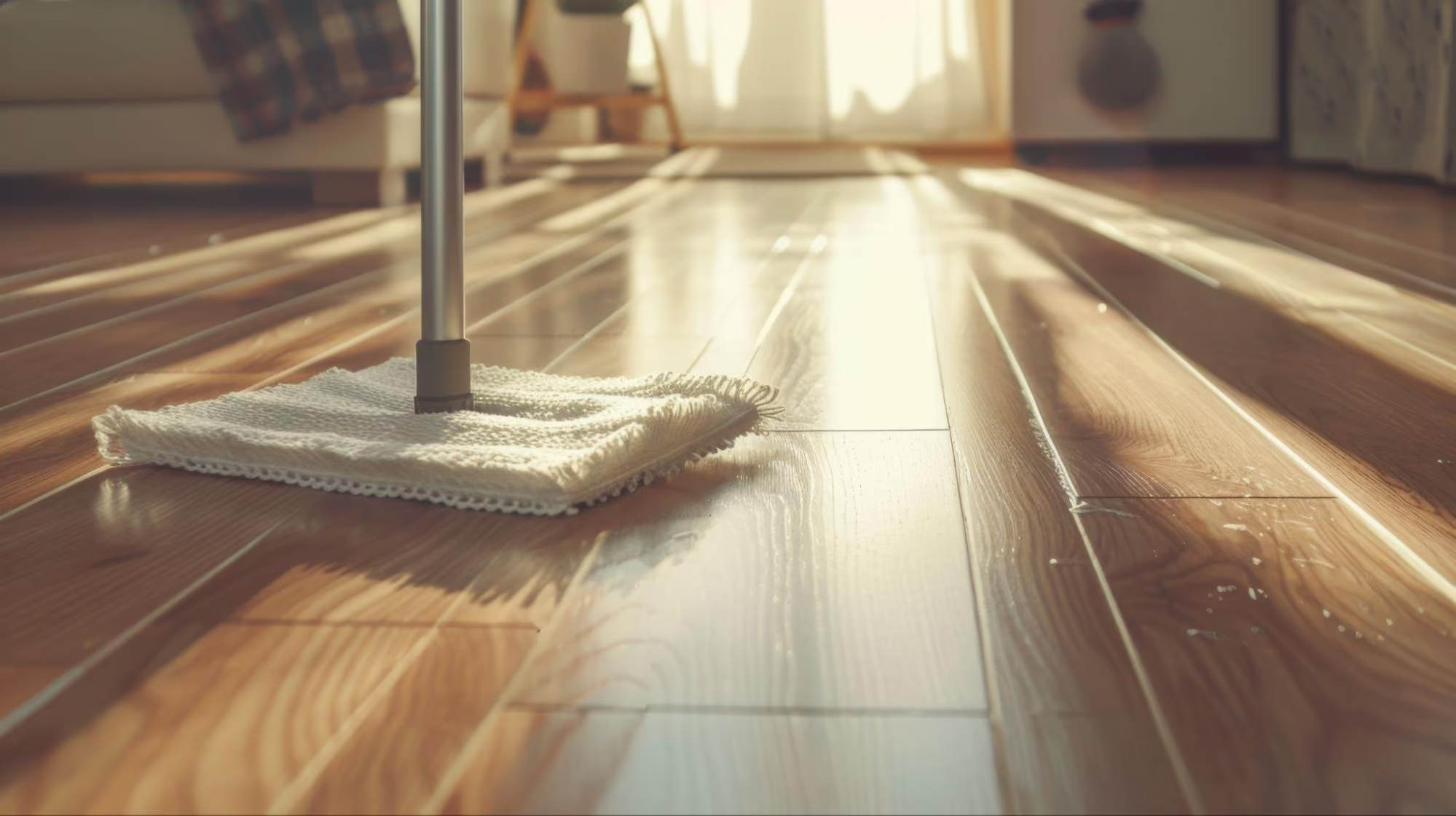
Daily sweeping with a soft-bristle broom is the most important routine maintenance step — removing the sand, grit, and salt particles that coastal environments deposit on floor surfaces and that act as abrasives underfoot with every footstep. Weekly vacuuming on the bare floor setting removes finer debris that sweeping misses. Mopping should use a damp — not wet — mop with a manufacturer-recommended hardwood cleaner, avoiding excess water that can seep into wood seams and cause swelling. In coastal areas specifically, a microfiber cloth wipe-down between cleanings removes salt residue that settles on surfaces from salt-laden air before it can build up and degrade the finish. Wet mops and steam mops should never contact hardwood floors in any climate, and this prohibition is particularly important in Charleston where the floor is already managing ambient moisture stress.
What protective measures most effectively extend hardwood floor life in Charleston homes?
Five protective measures produce the highest return in Charleston's specific environment. Felt pads under all furniture legs prevent the scratch damage that furniture movement produces on finished wood surfaces. A no-shoes policy at entry points limits the introduction of moisture, sand, and salt that outdoor shoes carry in from Charleston's coastal environment. Sealing windows and doors against moisture intrusion reduces the ambient humidity load that the HVAC system must manage. UV-protective window treatments prevent the fading and discoloration that prolonged direct sunlight causes — a consideration in Charleston's high-UV environment where sun exposure is both intense and consistent. Entry mats at all exterior entry points capture the majority of outdoor debris before it reaches the floor surface.
How often should Charleston homeowners schedule professional hardwood floor maintenance and what does it involve?
The humid, salty coastal environment of Charleston accelerates the wear rate on hardwood finishes relative to drier climates, making professional maintenance frequency a more consequential decision than it is for homeowners in less demanding environments. Resealing as needed — rather than on a fixed calendar — requires monitoring the floor's finish condition and responding when water no longer beads on the surface, indicating that the protective seal has degraded. Buffing and recoating every three to five years refreshes the finish and restores the protective layer that daily use and humidity cycling gradually deplete. Annual inspection for signs of warping, buckling, cupping, or gap formation identifies humidity-related damage early, when correction is less costly than when deterioration has progressed. Flooring Services LLC provides professional assessment and maintenance services for Charleston homeowners managing hardwood floors in the Lowcountry's specific climate conditions.
Hardwood floors are a beautiful and timeless addition to any home, but Charleston’s unique climate presents specific challenges for maintaining them. The combination of high humidity, salty air, and temperature fluctuations can impact your hardwood flooring. With the right care and maintenance routine, you can keep your floors looking stunning for years to come. Here’s a comprehensive guide to caring for hardwood floors in Charleston’s climate.
1. Keep Humidity Levels in Check
Charleston’s humidity levels can wreak havoc on hardwood floors, causing them to expand, contract, and even warp. To protect your flooring:
- Install a Hygrometer: Monitor the humidity levels in your home to ensure they stay within the recommended range.
- Seal Windows and Doors: Prevent outside moisture from seeping into your home.
2. Protect Against Temperature Fluctuations
While Charleston’s winters are mild, temperature shifts can still impact your floors.
- Maintain a Consistent Indoor Temperature: Keep your thermostat set between 60-80°F to avoid unnecessary stress on the wood.
- Avoid Direct Sunlight: UV rays can cause fading and discoloration. Use curtains or blinds to shield your floors from prolonged sunlight exposure.
3. Clean Properly and Frequently
Dirt, sand, and other particles common in Charleston can act like sandpaper on hardwood floors.
- Sweep Often: Use a soft-bristle broom to remove debris.
- Vacuum Weekly: Opt for a vacuum designed for hardwood floors to prevent scratching.
- Mop Carefully: Use a damp mop with a manufacturer recommended hardwood cleaner, avoiding excess water, as it can seep into the wood and cause damage.
4. Prevent Damage from Salty Air
Living near the coast means salty air can settle on surfaces, including your hardwood floors.
- Wipe Down Floors Regularly: A microfiber cloth can remove salt buildup.
5. Use Protective Measures
Small steps can go a long way in prolonging the life of your floors.
- Install Felt Pads: Attach pads to the bottom of furniture to prevent scratches.
- Encourage a No-Shoes Policy: Shoes can bring in moisture and dirt, which can damage your floors over time.
6. Schedule Regular Maintenance
Periodic professional maintenance is essential for keeping hardwood floors in top condition.
- Re-Seal As Needed: Protect your floors with a fresh layer of sealant to guard against Charleston’s humid and salty environment.
- Buff and Recoat: Revive your floor’s finish every 3-5 years, depending on wear and tear.
- Inspect for Damage: Check for signs of warping, buckling, or gaps, and address issues promptly with professional help.
Why Trust Flooring Services LLC?
At Flooring Services LLC, we understand the unique challenges that arise when owning hardwood flooring. With decades of experience, we’re here to provide expert advice, installation, and maintenance services tailored to your home’s needs.
Contact Us Today!
Whether you need help installing new hardwood floors or maintaining your existing ones, Flooring Services LLC is your trusted partner in Charleston, SC. Contact us today for a consultation and let us help you preserve the beauty of your hardwood floors!
Why does Charleston's humid subtropical climate stress hardwood floors more than most climates and what are the specific damage mechanisms homeowners need to understand?
- Wood is a hygroscopic material that continuously exchanges moisture with its surrounding environment, expanding as it absorbs ambient humidity and contracting as it releases it. In Charleston's climate, where outdoor relative humidity regularly exceeds 70 percent throughout the warm months, this exchange is more frequent and more extreme than in drier climates — producing larger and more rapid dimensional changes in wood floors.
- Cupping — where board edges rise higher than the center — is the most common humidity-related hardwood damage in Charleston and results from the bottom of planks absorbing more moisture than the top, typically from moisture rising through the subfloor. This is a specific risk in Charleston's older homes with crawl space foundations and in ground-floor installations near the water table.
- Buckling — where boards lift partially or fully from the subfloor — is the most severe humidity damage outcome and occurs when sustained moisture exposure causes expansion that exceeds what the installation's expansion gaps can accommodate. In Charleston, this condition most commonly develops during extended periods of HVAC shutdown in summer, when indoor humidity rises to outdoor levels rapidly.
- Salt air from the coast is a damage mechanism that inland hardwood care guides do not address because it does not exist inland. Salt particles carried on coastal air settle on floor surfaces continuously and, if allowed to accumulate, degrade finish chemistry over time and introduce a mildly corrosive presence that accelerates surface wear in ways that standard cleaning frequency is designed to prevent.
- UV radiation intensity in Charleston's coastal environment exceeds what most general hardwood care guidance assumes, producing faster fading and discoloration in sun-exposed floor areas than homeowners who have moved from northern or inland markets expect. This is particularly relevant for light-colored hardwood species and oil-based finishes that yellow and amber under sustained UV exposure.
- The combination of humidity, salt air, and UV exposure acting simultaneously creates a cumulative stress on hardwood floors that is greater than any single factor would produce alone — making Charleston-specific care practices genuinely different from general hardwood maintenance guidance rather than simply a more extreme version of the same recommendations.
How should humidity management be structured in a Charleston home to protect hardwood floors across all seasons?
- A hygrometer monitoring indoor relative humidity continuously is the foundational tool for hardwood floor protection in Charleston — without measurement, humidity management is guesswork that responds to visible damage rather than preventing it. Hygrometers are inexpensive and the information they provide is the basis for every other humidity management decision.
- Consistent air conditioning operation during warm months is the primary dehumidification mechanism for Charleston homes — air conditioning removes moisture from indoor air as a byproduct of cooling, but only when running. Allowing the system to cycle off during extended absences, vacations, or to reduce energy costs exposes hardwood floors to the full ambient humidity of Charleston's summer environment within hours.
- Portable dehumidifiers in high-risk zones — ground-floor rooms, sunrooms, spaces near exterior entry points, and rooms above crawl spaces — supplement whole-home HVAC management in the areas where humidity concentrates most. These zones consistently run higher humidity than the rest of the home and generate disproportionate floor damage risk relative to their square footage.
- Crawl space moisture management is a specific Charleston requirement for homes with crawl space foundations — the most common foundation type in older Charleston residential construction. Ground moisture migrating upward through an unencapsulated crawl space into the subfloor and floor above is the mechanism that produces the subfloor moisture that causes cupping from below. Crawl space encapsulation with a vapor barrier and a dedicated dehumidifier addresses this source directly rather than managing its effects at the floor surface.
- Winter humidity management is the less-discussed seasonal requirement in Charleston because most hardwood humidity guidance focuses on summer moisture. Charleston's winters, while mild, produce lower indoor humidity when heating systems run — causing boards that expanded in summer to contract and potentially develop gaps. Running a humidifier during the heating season when indoor humidity drops below 30 percent prevents this drying damage.
- Sealing windows and doors against moisture intrusion reduces the ambient humidity load that the HVAC system must manage — particularly at entry points where doors are opened frequently and in older homes where window and door seals have degraded. This is a structural humidity management measure that extends the effectiveness of mechanical dehumidification rather than replacing it.
What cleaning routine produces the best hardwood floor maintenance results in Charleston's coastal environment?
- Daily sweeping with a soft-bristle broom is the highest-frequency, highest-impact maintenance action for Charleston hardwood floors because the combination of coastal sand, salt particles, and pollen that the local environment deposits on floors acts as a continuous abrasive underfoot with every footstep. This abrasion accumulates into visible finish wear faster in Charleston than in environments without this particulate load.
- Weekly vacuuming on the bare floor setting removes the finer debris that sweeping misses — fine sand particles, salt residue, and dust that settle into the texture of the finish and create micro-scratches that dull the floor's appearance over time. The beater bar setting must be disabled during vacuuming because it scratches hardwood surfaces regardless of how carefully the vacuum is moved.
- The microfiber cloth wipe-down between standard cleaning cycles is a Charleston-specific maintenance step that inland hardwood care does not require. Salt residue that settles from coastal air needs more frequent surface removal than a weekly cleaning cycle provides — a quick microfiber wipe in high-traffic areas between cleanings removes this accumulation before it can degrade finish chemistry or create surface texture that traps additional debris.
- Damp mopping with a manufacturer-recommended hardwood cleaner applied to a well-wrung mop provides effective surface cleaning without the moisture intrusion risk that wet mopping introduces. The goal is to clean the finish surface without introducing water to plank seams or subfloor joints — a distinction that is particularly important in Charleston's already moisture-stressed flooring environment.
- Wet mops and steam mops are categorically incompatible with hardwood floors in any climate, and this prohibition is more consequential in Charleston where the floor is already managing ambient moisture stress from the surrounding environment. Steam mops drive heat and moisture simultaneously into the wood and finish — accelerating the damage mechanisms that Charleston's climate already imposes.
- pH-neutral cleaning products specified for hardwood floors are the only appropriate cleaning chemistry — general household cleaners, vinegar-based solutions, and products marketed for other floor types all damage hardwood finishes in ways that accumulate with repeated use. In Charleston's environment, where the finish is the primary defense against humidity and salt air, protecting its integrity through correct cleaning chemistry is a more consequential decision than in protected inland environments.
What protective measures most effectively prevent the specific damage mechanisms that Charleston's environment imposes on hardwood floors?
- Entry mats at all exterior doors — a coarser mat outside and an absorbent mat inside — capture the sand, salt, and moisture that outdoor shoes carry from Charleston's coastal environment before they reach the floor surface. Industry estimates suggest walk-off mats capture up to 80 percent of the debris that would otherwise be tracked onto interior flooring — a reduction that extends the interval between professional maintenance and slows the abrasive wear that this particulate causes.
- A no-shoes policy at entry points is the most effective single measure for limiting moisture and salt introduction from outdoor sources. Shoes that have walked on Charleston's beaches, docks, and streets carry concentrated salt, sand, and moisture that distribute across the floor surface with every step — a policy that replaces shoes with slippers or socks at entry eliminates this source entirely.
- Felt pads under all furniture legs prevent the scratch accumulation that furniture movement produces on finished wood surfaces during the normal repositioning, cleaning, and rearranging that household furniture undergoes. These pads should be inspected and replaced periodically because accumulated grit on worn pads can itself scratch the floor surface.
- UV-protective window treatments address the fading and discoloration that Charleston's high-intensity sun produces on hardwood surfaces in sun-exposed rooms. Curtains, blinds, or UV-blocking window film limit the UV radiation that reaches the floor — preventing the color differential between sun-exposed and protected areas that develops over years of unmanaged sun exposure and that refinishing is the only way to correct.
- Area rugs in high-traffic paths protect the finish from the concentrated abrasion that foot traffic produces in specific floor zones — entryways, hallways, and living room thoroughfares. Rugs should be breathable rather than rubber-backed to prevent moisture accumulation beneath them against the floor surface, which would work against the humidity management that the rest of the care routine is designed to maintain.
- Maintaining consistent indoor temperature between 60 and 80 degrees Fahrenheit reduces the thermal expansion and contraction cycles that stress board connections and finish adhesion across Charleston's seasonal temperature variation. Extreme temperature swings during unoccupied periods — homes left without climate control during travel — produce accelerated cumulative wear on floor structure and finish that consistent temperature management prevents.
When should Charleston homeowners schedule professional hardwood floor maintenance and what does each service level involve?
- Annual professional inspection is the minimum maintenance frequency for Charleston hardwood floors given the climate's accelerated wear rate on finishes. Inspection by an experienced hardwood flooring professional identifies cupping, early-stage warping, finish wear patterns, gap formation, and subfloor moisture conditions that homeowner observation is not calibrated to catch — and that are significantly less expensive to address early than after they have progressed.
- Resealing frequency should be determined by floor condition rather than a fixed calendar, using the water bead test as the field indicator of seal integrity. When water no longer beads on the floor surface and instead soaks in or darkens the wood, the protective seal has degraded to the point where moisture and contaminants are reaching the wood — and resealing should occur promptly rather than waiting for a scheduled maintenance date.
- Screen and recoat — light surface abrasion followed by a fresh topcoat — is the appropriate service for floors whose finish has dulled or worn but whose wood surface is otherwise undamaged. In Charleston's climate, where the finish is working harder than in drier environments, this service every three to five years maintains the protective layer that prevents the humidity and salt air damage that penetrates compromised finish.
- Full sanding and refinishing becomes necessary when surface scratches have penetrated to the wood, when staining has reached below the finish layer, or when cupping or warping has produced surface irregularities that a topcoat cannot address. This comprehensive restoration returns the floor to new condition and is the intervention that corrects accumulated climate-related damage that maintenance has not been able to prevent.
- Post-storm assessment after significant weather events is a Charleston-specific professional maintenance consideration that inland hardwood care guidance does not include. Hurricane season flooding, storm surge, and the extended periods of extreme outdoor humidity that follow major storms can produce moisture damage that develops beneath an intact-appearing floor surface — professional assessment after significant weather events identifies developing conditions before they progress to structural failure.
- Flooring Services LLC's expertise in Charleston's specific climate conditions — the crawl space moisture patterns, the seasonal humidity extremes, the coastal salt air environment, and the older home construction details that create unique maintenance challenges — means that professional assessment and maintenance service is informed by direct experience with the conditions Charleston hardwood floors actually face rather than general hardwood maintenance knowledge applied to a local market.
What are the signs that a Charleston hardwood floor needs professional intervention and how should homeowners respond to each?
- Cupping — where plank edges are higher than the center — is the earliest visible indicator of a moisture imbalance between the top and bottom of the plank, typically from subfloor moisture rising from beneath. Minor cupping that appears and resolves seasonally may be manageable through improved humidity control; cupping that persists or worsens requires professional assessment to identify and address the moisture source before sanding and refinishing can correct the surface.
- Buckling — where boards lift partially or fully from the subfloor — requires immediate professional attention because it indicates a moisture condition severe enough to overcome the installation's structural holding capacity. Attempting to press buckled boards back into position without addressing the moisture source is not an effective response — the condition will recur as long as the moisture source remains active.
- Persistent gaps between planks that do not close as seasonal humidity rises indicate either that the installation lacked adequate expansion accommodation for Charleston's humidity range, or that the boards have dried and contracted beyond the range from which normal seasonal re-expansion will recover them. Professional assessment determines whether the gaps are within normal seasonal variation or require intervention.
- Finish dullness that cleaning does not restore signals that the finish layer has been depleted — either through abrasion, UV degradation, or cleaning chemical damage — to the point where it no longer provides the reflective surface or the protective function it was designed to maintain. Screen and recoat is the appropriate professional response before the depleted finish allows moisture and contaminants to reach the wood directly.
- Dark staining in specific floor areas indicates moisture penetration below the finish layer — either from surface spills that reached the wood before being cleaned, or from subfloor moisture migrating upward. Surface staining that has reached the wood cannot be cleaned from above and requires professional refinishing to address — and the moisture source must be identified and resolved before refinishing proceeds or the staining will recur.
- A musty odor in a room with hardwood floors can indicate moisture accumulation beneath the floor surface or within the subfloor — a condition that may not yet be visible as surface distortion but that is actively producing the biological conditions that will eventually damage both the flooring and the subfloor structure. Professional moisture assessment before the condition becomes visually apparent prevents the more extensive and more expensive intervention that visible structural damage requires.