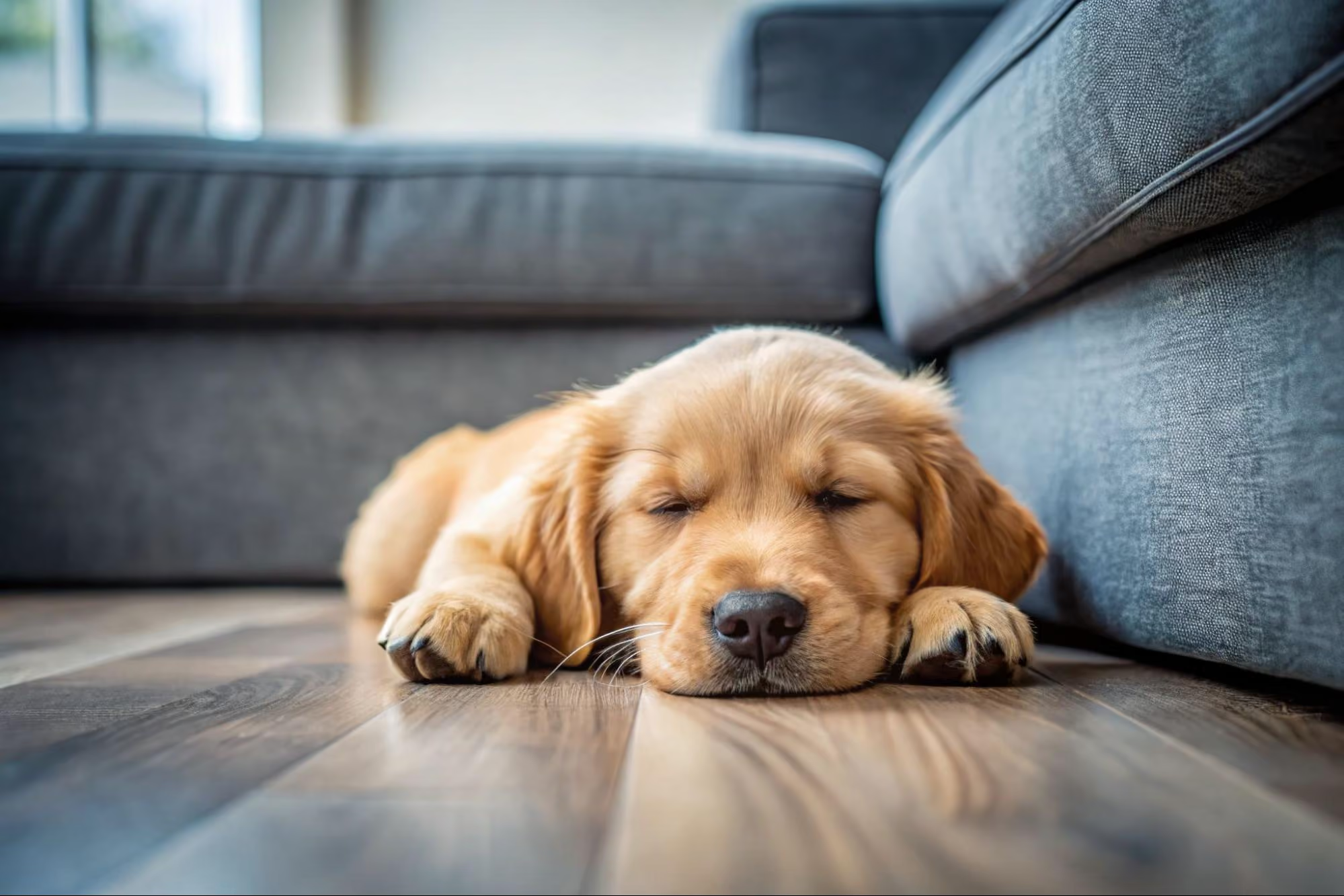
Why is vinyl flooring considered the best flooring option for homes with pets?
Vinyl flooring — particularly luxury vinyl plank and luxury vinyl tile — addresses the specific performance demands that pets impose on a floor more completely than any other flooring category. It is fully waterproof, resisting pet accidents and water bowl spills without damage to the floor structure. Its wear layer resists scratches from pet claws that would permanently mark hardwood or laminate. Its smooth, non-porous surface does not trap pet hair, dander, or odors the way carpet does. And its soft, slightly warm surface is more comfortable for pets to walk and rest on than tile or stone.
How does vinyl flooring handle pet scratches compared to hardwood and other alternatives?
Vinyl flooring's wear layer — the protective top coat applied over the design layer — provides scratch resistance that hardwood, engineered hardwood, and laminate cannot match under sustained pet claw contact. Hardwood is permanently scratched by dog claws over time and requires refinishing to restore its surface. Laminate scratches similarly and cannot be refinished. Vinyl's wear layer absorbs claw contact without permanent marking in most cases, and in the event of localized damage, individual planks can be replaced without disturbing the surrounding floor — a repair option that hardwood and laminate do not offer as cleanly.
What makes waterproof vinyl flooring specifically valuable for pet owners?
Pet accidents introduce liquid to a floor surface in ways that hardwood, laminate, and even some tile installations cannot fully withstand. Hardwood warps and stains when moisture penetrates the finish. Laminate swells and delaminates. Waterproof vinyl — which is impermeable through its full core thickness in quality LVP products — does not absorb moisture regardless of how long a spill or accident sits. Cleanup is straightforward: wipe, rinse, and dry. The floor structure underneath is unaffected. For households with puppies, senior pets, or any animal with occasional accidents, this waterproofing is the most operationally significant performance advantage vinyl offers.
How easy is vinyl flooring to maintain in a home with active pets?
Vinyl flooring's maintenance demands are among the lowest of any flooring category in a pet household. Daily pet hair removal requires only a soft-bristle broom or dry microfiber mop — hair does not embed into the surface the way it does in carpet pile. Muddy paw prints wipe clean without residue or staining. Pet accidents are cleaned with standard household cleaning products without risk of surface damage. There are no sealing requirements, no refinishing cycles, and no specialized cleaning products needed. For a pet household, vinyl's low maintenance burden is a meaningful quality-of-life advantage over the alternatives.
Is vinyl flooring comfortable enough for pets, particularly older dogs with joint issues?
Vinyl flooring is meaningfully softer and warmer underfoot than tile, stone, or hardwood — materials that are cold, hard, and unforgiving for pets who spend significant time resting on the floor. Quality LVP and LVT products often include attached underlayment or foam backing layers that add cushioning underfoot, which benefits both pets and their owners. For older dogs or cats with joint sensitivity, the slight give of vinyl underfoot is a genuine comfort advantage over hard surface alternatives. Its textured surface also provides better traction than polished tile or hardwood, reducing the slipping that can cause joint stress in pets navigating hard floors.
If you're a proud pet owner, you know that your furry friends are more than just animals—they're family. But as much love and joy as pets bring into our lives, they can also bring a fair amount of wear and tear into our homes, especially when it comes to floors. From muddy paw prints to sharp claws, not all flooring can stand up to the demands of daily life with dogs and cats. That’s where vinyl flooring comes in.
At Flooring Services LLC, we’ve helped countless homeowners find the perfect flooring to match their lifestyle—including the pet lovers out there. Here’s why vinyl flooring is one of the best choices for homes with pets.
1. Durable and Scratch-Resistant
Pets are playful—and sometimes a little rough on floors. Whether it’s the claws of a large dog or the zoomies of a curious cat, floors can take a beating. Vinyl flooring, especially luxury vinyl plank (LVP) or luxury vinyl tile (LVT), is built to be tough. It resists scratches and dents better than many other flooring options, making it a smart long-term investment for pet owners.
2. Waterproof Options for Accidents and Spills
Accidents happen—especially with new puppies or older pets. Many vinyl flooring products are waterproof, making cleanup a breeze. No need to stress over spilled water bowls, pet accidents, or tracked-in mud. Just wipe it up and go. That peace of mind is priceless when you’ve got pets roaming the house.
3. Easy to Clean and Maintain
Let’s face it—pets can be messy. But vinyl flooring makes cleaning simple. Its smooth surface doesn’t trap pet hair, dander, or dirt the way carpet does. Regular sweeping and occasional mopping are all it takes to keep vinyl looking fresh.
4. Comfortable Underfoot—for You and Your Pets
Vinyl flooring is softer and warmer underfoot compared to tile or hardwood. That’s good news for you and even better news for your pets who love to lounge around the house. Some vinyl floors even come with added cushioning layers, making them extra comfortable for paws and joints—especially for older dogs or cats.
5. Affordable and Stylish
Vinyl flooring has come a long way in terms of design. Today’s vinyl options come in a wide variety of colors, textures, and patterns that mimic the look of hardwood, stone, and tile—at a fraction of the cost. You get the style you want and the functionality your pets need, all without breaking the bank.
6. Quiet and Slip-Resistant
If your pets are easily startled or prone to slipping on slick surfaces, vinyl flooring can help. It absorbs sound better than harder surfaces, which means fewer clickety-clack noises from pet nails. Many vinyl options also offer textured surfaces that provide better traction, helping your pets feel more secure when they move around.
7. A Long-Term Investment in a Pet-Friendly Home
When you choose vinyl flooring, you’re not just picking something that works now—you’re choosing a flooring solution that’s built to last. With proper care, vinyl flooring can look great for years to come, even in the most active pet-friendly households.
Let Flooring Services LLC Help You Find the Perfect Pet-Friendly Flooring
At Flooring Services LLC, we understand how important it is to have floors that work for your whole family—furry members included. We offer a wide selection of vinyl flooring options in styles that suit every taste and budget. Our team can help you choose the right product and provide professional installation for a seamless, stress-free experience.
Ready to upgrade your floors with something pet-approved and homeowner-loved?
Contact Flooring Services LLC today to schedule a free in-home consultation—we’ll bring the flooring samples to you!
What specific performance characteristics make vinyl flooring the most practical flooring choice for pet owners?
- Full waterproofing through the core of quality LVP and LVT products' is the single most consequential performance characteristic for pet owners. Unlike hardwood, engineered hardwood, and laminate — which are damaged by moisture penetration — waterproof vinyl withstands pet accidents, water bowl spills, and tracked-in moisture without swelling, warping, staining, or structural damage.
- Scratch resistance from the wear layer' addresses the claw contact that makes hardwood and laminate inappropriate long-term specifications for homes with dogs or cats. The wear layer's thickness — measured in mils — directly determines how well the floor resists claw marks under sustained daily contact. Commercial-grade wear layers of 20 mils or more provide the strongest pet-claw resistance available in residential LVP.
- Non-porous surface construction prevents odor absorption' that is among the most persistent maintenance problems in pet households with carpet. Pet dander, accident residue, and general animal odor penetrate carpet fibers and backing in ways that no surface cleaning fully addresses. Vinyl's non-porous surface holds no odor between cleanings — a functional hygiene advantage that compounds over the life of the floor.
- Easy surface cleaning eliminates the maintenance burden' that pet ownership imposes on harder-to-clean flooring types. Pet hair sweeps off vinyl without embedding. Muddy prints wipe clean. Accidents are addressed with standard cleaning products. No specialized care, no refinishing, no sealing — vinyl's maintenance profile is as close to zero-burden as flooring gets.
- Individual plank replaceability in click-lock LVP systems' means that localized damage — a deep scratch, a gouge from a chew toy, a stain that reached the core — can be addressed by replacing only the affected planks rather than the entire floor. This repair flexibility is a long-term cost management advantage that hardwood and laminate do not offer as cleanly.
- Traction from textured vinyl surfaces reduces the slipping risk' that polished tile and hardwood create for pets navigating hard floors. Pet joint health is directly affected by repeated slipping on hard, smooth surfaces — vinyl's textured wear layer provides the grip that keeps pets moving safely without the rug coverage that smooth floor owners must add to address the same problem.
How does vinyl flooring's scratch resistance compare to hardwood, laminate, and tile in pet households?
- Hardwood is the most vulnerable mainstream flooring to pet claw damage' because its surface finish — polyurethane or oil-based coating over real wood — is relatively thin and does not recover from scratch contact. Dog claws, particularly from larger breeds, produce visible scratch patterns in hardwood finish within months of installation in active households. These scratches accumulate into a worn appearance that requires professional refinishing to address.
- Laminate's scratch resistance is often overstated relative to pet claw contact'. Laminate's wear layer is harder than hardwood finish in some respects but scratches differently — producing white or light-colored marks where the decorative layer is penetrated that are more visually prominent than wood-tone scratches in hardwood. Laminate cannot be refinished, making scratch accumulation a replacement-triggering condition rather than a maintenance-addressable one.
- Tile is effectively scratch-proof' relative to pet claws and in that single characteristic outperforms vinyl — but its cold, hard surface, grout line maintenance requirements, and acoustic hardness make it a lower overall specification for pet households despite its scratch immunity.
- Vinyl's wear layer provides scratch resistance that is meaningfully better than hardwood and laminate' under pet claw conditions, and while deep scratches from large-breed dogs with unclipped nails can mark even quality LVP, the damage threshold is higher and the repair option — individual plank replacement — is more accessible than refinishing or full floor replacement.
- Wear layer thickness is the vinyl specification variable that most directly determines pet scratch performance. A 6-mil wear layer provides basic residential protection'. A 12-mil layer handles moderate pet activity. A 20-mil or greater commercial-grade wear layer provides the strongest available resistance for households with multiple dogs or large breeds whose claw contact is frequent and forceful.
- Keeping pet nails trimmed reduces the scratch load on any flooring surface' and is a maintenance habit that meaningfully extends the appearance life of vinyl flooring in pet households — not because vinyl requires it to perform adequately, but because the combination of trimmed nails and a quality wear layer produces a floor that looks new for significantly longer than either measure alone.
What does full waterproofing mean in practice for pet owners and how does vinyl's moisture performance differ from alternatives?
- Full waterproofing in quality LVP means the core material itself does not absorb water' — not just that the surface repels liquid. This distinction matters because it determines what happens when a pet accident sits unnoticed for hours rather than minutes. A waterproof core remains undamaged regardless of exposure duration; a water-resistant but not waterproof product may resist brief exposure but absorbs moisture over time.
- Hardwood's vulnerability to moisture is not a maintenance failure — it is a material characteristic'. Wood expands when it absorbs moisture, producing warping, cupping, and finish separation that requires professional intervention to address. In a pet household where accidents are a regular occurrence, hardwood's moisture vulnerability produces recurring repair costs that vinyl eliminates entirely.
- Laminate swells and delaminates when moisture penetrates between planks' — a failure mode that is permanent and requires full floor replacement in affected areas. Laminate's click-lock joints create pathways for moisture to reach the core if liquid sits on the surface long enough. Pet accidents that go undetected for hours are the most common cause of laminate moisture failure in residential installations.
- Vinyl's waterproofing extends to the subfloor protection it provides' when installation is correctly executed. A properly installed waterproof LVP floor prevents moisture from reaching the subfloor below — protecting the structural layer beneath from the humidity, condensation, and occasional liquid exposure that ground-floor and below-grade installations experience.
- Pet water bowls are a chronic moisture source that most flooring buyers underestimate'. Splashing during drinking, water tracked by wet muzzles, and bowl overflow produce ongoing low-level moisture exposure at a fixed location. Hardwood and laminate installations near pet water stations show localized damage patterns within one to two years. Vinyl's waterproofing makes water bowl placement a non-issue regardless of spillage frequency.
- Accident cleanup on waterproof vinyl is genuinely straightforward' in ways that it is not on carpet, hardwood, or laminate. Blot the liquid, clean the surface with a pet-safe cleaning product, rinse, and dry. No penetration has occurred, no odor has been absorbed into the floor structure, and no structural damage has been done regardless of the accident volume or detection delay.
How does vinyl flooring's comfort profile benefit pets and what should pet owners know about surface feel and traction?
- Vinyl is softer and warmer underfoot than tile, stone, or hardwood' — a difference that is immediately perceptible to both humans and pets. The slight give of vinyl's core construction absorbs impact in ways that rigid hard surfaces do not, reducing the joint stress that repeated impact on unforgiving floors produces over time.
- Older pets with arthritis or joint sensitivity benefit measurably from softer flooring surfaces'. Veterinary guidance on joint health in aging dogs and cats consistently identifies hard floor surfaces as a contributor to joint discomfort — the slight cushioning of vinyl versus the complete rigidity of tile or hardwood is a genuine welfare consideration for households with senior animals.
- Attached underlayment and foam backing layers in quality LVP products' add meaningful cushioning beyond the core material itself, producing a surface that feels noticeably softer underfoot than standard LVP without these layers. For households with large dogs who spend significant time lying on hard floors, this additional cushioning is a comfort upgrade that tile and hardwood cannot match.
- Textured vinyl surfaces provide traction that polished tile and hardwood cannot'. Pets — particularly dogs — slip on smooth hard floors when accelerating, turning, and stopping. Repeated slipping stresses joints and creates anxiety around certain surfaces. Vinyl's textured wear layer provides grip that reduces slipping without requiring area rugs across the full floor.
- Sound absorption in vinyl flooring reduces the clickety-clack of pet nails' that tile and hardwood amplify in ways that many pet owners find disruptive. Vinyl's construction absorbs impact sound rather than transmitting it — producing a quieter household environment that benefits both the occupants and pets who are sensitive to sudden sharp noises.
- Temperature comfort in vinyl versus tile is a meaningful pet welfare distinction' in Charleston's climate. Tile floors in air-conditioned homes become cold enough in summer to be uncomfortable for pets who prefer to rest on the floor — vinyl's warmer surface temperature makes it a more comfortable resting surface across seasonal temperature swings without the thermal mass that makes tile uncomfortable in cooled spaces.
How does vinyl flooring's style and design range address pet owners' concern that practical flooring must sacrifice aesthetics?
- Modern vinyl flooring's design technology has closed the visual gap with hardwood and stone' to a degree that makes practical pet-appropriate flooring and premium aesthetic indistinguishable to most observers. High-resolution printing and embossed texture technology produce wood-look and stone-look vinyl that buyers and guests consistently mistake for the genuine material.
- Solution-dyed and through-body color in quality vinyl products' means that surface wear — including the minor scratching that even quality wear layers eventually accumulate — does not reveal a contrasting color beneath. The design layer extends through enough of the product thickness that normal wear does not produce the white or light-colored scratch marks that some lower-quality vinyl products develop.
- Wood-look LVP in wide-plank formats has become the dominant aesthetic in new residential construction' precisely because it delivers the visual warmth of hardwood at a fraction of the cost and with none of the moisture or scratch vulnerability. Pet owners do not have to accept an institutional or compromise aesthetic to get the performance their household requires.
- Stone-look LVT delivers the visual sophistication of natural stone' in kitchens, bathrooms, and entryways without the cold surface temperature, slip risk, or sealing maintenance that actual stone imposes — and with full waterproofing that stone installations without proper sealing do not provide.
- Color and pattern options in current vinyl product lines span the full range of residential design directions' — from light Scandinavian-influenced wide-plank oak looks to dark dramatic walnut tones, from marble-look tile to slate and concrete aesthetics. Pet owners are not choosing between practical and attractive — they are choosing which attractive option also performs for their household.
- Flooring Services LLC's mobile showroom capability' allows pet-owning homeowners to evaluate vinyl options in their actual space, under their home's lighting, against their existing furnishings, before committing to a specification — removing the risk of a selection that looks different in the home than it did in a showroom and ensuring that the practical and aesthetic requirements of the household are both met by the chosen product.
How should pet owners approach vinyl flooring selection, specification, and installation to maximize performance and longevity?
- Wear layer thickness is the most important specification variable for pet households' and should be the first number evaluated in any product comparison. Residential-grade products begin at 6 mils; 12 mil is appropriate for moderate pet activity; 20 mil and above is the correct specification for multiple dogs, large breeds, or households where claw maintenance is inconsistent.
- Core construction affects both waterproofing and dimensional stability' in ways that affect long-term performance. Stone plastic composite core — SPC — is denser and more dimensionally stable than wood plastic composite — WPC — making it the stronger specification for high-moisture environments and installations over radiant heat. WPC's foam core provides additional cushioning that SPC does not, making it the softer underfoot option for households prioritizing pet comfort over maximum rigidity.
- Attached underlayment is worth evaluating as a specification component' rather than assuming it will be added separately. Products with integrated underlayment produce a softer, quieter installation and eliminate the labor step of separate underlayment installation — a practical simplification for renovation projects where schedule matters.
- Subfloor preparation before vinyl installation directly affects how the floor performs under pet activity'. An unlevel subfloor creates flex points in click-lock installations where planks are subjected to bending stress under impact — a condition that accelerates joint failure in areas of repeated concentrated pet activity like feeding stations and favorite resting spots.
- Professional installation ensures that expansion gaps are correctly sized and placed' — a technical requirement that floating LVP installations must meet to accommodate thermal movement without buckling. Expansion gaps improperly sized or omitted produce floor lifting in warm seasons that pet activity makes worse by concentrating stress on already-stressed planks.
- Flooring Services LLC's consultation process for pet-owning homeowners' includes evaluation of the household's specific pet profile — species, size, breed, and activity level — alongside the installation environment to produce a vinyl specification that is genuinely matched to the actual performance demands the floor will face, rather than a generic recommendation that may underspecify for the household's actual conditions.