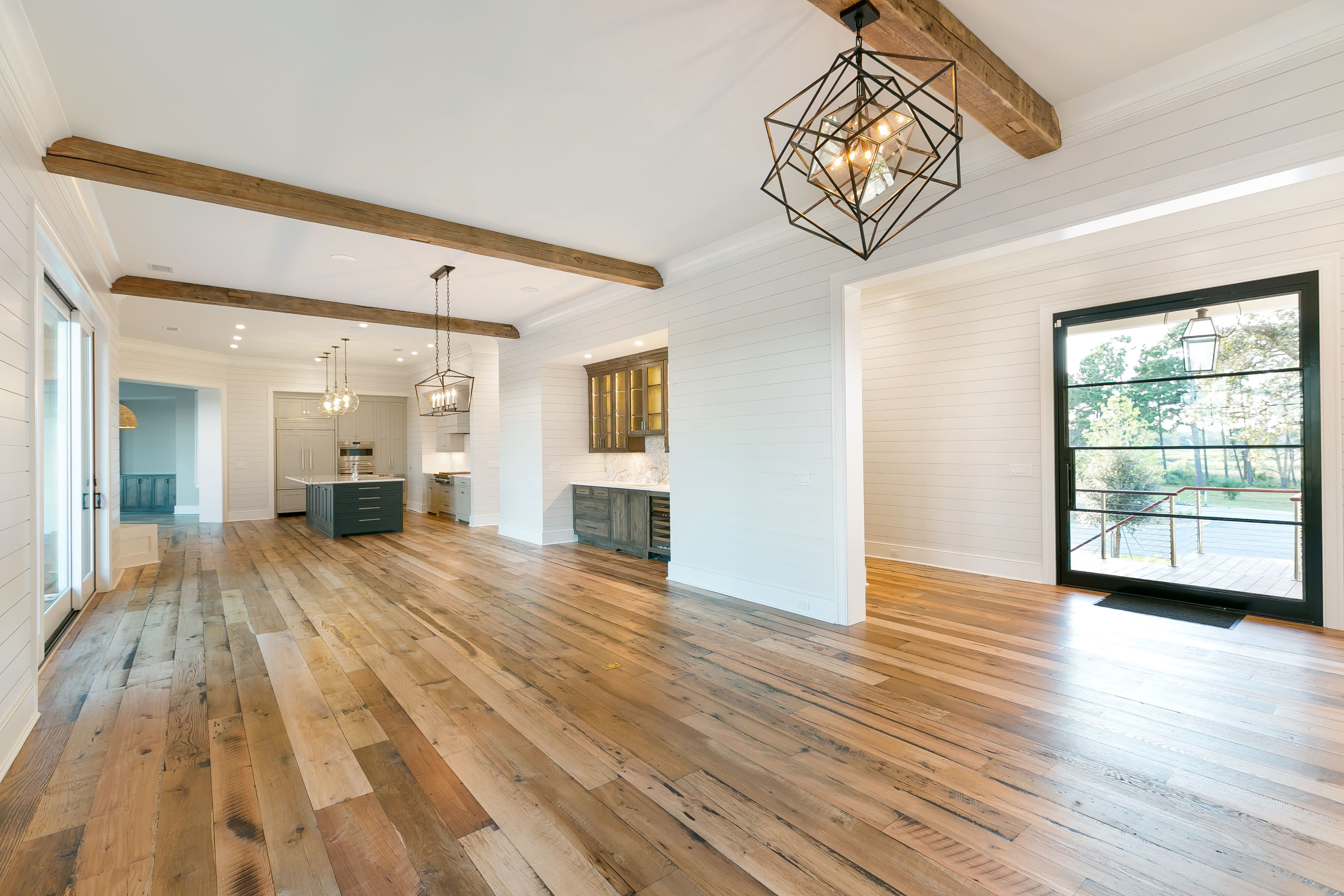
What are the clearest signs that flooring has exceeded its useful life and needs replacement rather than repair?
Five categories of floor condition signal that replacement is the correct response rather than continued repair. Excessive wear and tear — deep scratching and dents in hardwood, extreme matting and bald spots in carpet, cracks and peeling seams in tile or vinyl — indicates that the material has reached the end of its performance life. Floors that cannot be kept clean despite intensive effort signal wear so deep that dirt, odors, and moisture are embedding beyond what cleaning can reach. Safety issues including loose boards, tiles, or planks that move or feel spongy underfoot represent structural concerns that widespread loosening makes impossible to address with targeted repairs. Mobility needs changes for senior or injured household members make flooring modification for fall prevention a necessity rather than an aesthetic choice. Water damage including warping, mold, mildew, and spongy areas — particularly common in Charleston's humid coastal climate — typically requires full replacement because moisture-penetrated flooring cannot be restored to safe or hygienic condition.
How does excessive wear and tear present differently across hardwood, carpet, tile, and vinyl flooring and what does each indicate?
Each flooring type develops its own wear indicators that signal end-of-service-life conditions. Hardwood that shows heavy scratching, deep dents, significant fading, and worn-away stain or finish has reached a condition where the damaged surface layer has been depleted beyond what standard refinishing can address — particularly when scratches have penetrated to the wood itself rather than remaining in the finish layer. Carpet with extreme matting, crushed fibers that no longer recover, persistent staining, embedded odors, and bald spots where the pile has worn completely through has exhausted its fiber structure in ways that professional cleaning cannot reverse. Tile or vinyl with cracks, chips, buckling, or peeling seams has sustained structural damage to the material itself or to its installation bond — conditions where individual piece replacement is a temporary solution that neighboring pieces will follow as the same underlying condition affects them.
Why do floors that are difficult to keep clean signal replacement-level wear rather than a cleaning problem?
When a floor that was once maintainable with regular cleaning becomes impossible to keep clean despite intensive effort, the cause is almost always wear rather than cleaning technique or product selection. Hardwood floors with deep scratches and grooves create channels where dirt becomes physically trapped below the surface level that mopping reaches — the dirt is not on the floor, it is in it. Carpet that has become a persistent source of odors, pet hair, and allergens despite regular professional cleaning has reached a condition where the fibers and backing have absorbed these contaminants beyond the depth that extraction cleaning can access. Tile or vinyl with deteriorated joints and seams allows moisture and grime to seep into the installation gaps, where mopping cannot reach and where the conditions for permanent staining and biological growth persist between cleaning events. The floor's inability to become clean is a structural condition, not a maintenance failure.
What flooring safety issues require immediate attention and how should homeowners distinguish between a repair and a replacement situation?
Any loose board, tile, or plank that moves, squeaks, or feels spongy underfoot is a trip hazard that must be addressed immediately — not deferred until the next renovation cycle. In some cases, individual loose components can be refastened or replaced as targeted repairs. The replacement threshold is reached when loosening is widespread rather than isolated — affecting multiple boards or tiles across a significant floor area rather than one or two specific locations — indicating a systemic structural condition that targeted repairs will not resolve. Floors that have become extremely uneven or slanted, producing a notable grade change within a room, indicate damage at the subfloor level that surface-level repair cannot address. For senior adults or household members with mobility limitations, the stakes of flooring safety are particularly high — falls are the leading cause of both fatal and nonfatal injuries for senior citizens, and many occur at home on flooring that has developed safety hazards that replacement would eliminate.
How does water and moisture damage in Charleston's coastal climate create replacement-level flooring conditions?
Charleston's humid subtropical coastal climate creates moisture conditions that accelerate flooring damage beyond what homeowners in drier climates typically experience. High ambient humidity, coastal air, and the prevalence of crawl space foundations mean that water and moisture exposure is a persistent threat rather than an occasional event for many Lowcountry homes. When moisture penetrates hardwood, laminate, or carpet — producing watermarks, warping, mold, mildew, or a spongy feel underfoot — the damage is typically beyond repair for two reasons. First, the structural integrity of the material has been compromised in ways that dry out and re-treat attempts cannot restore. Second, mold and mildew established within or beneath flooring present ongoing health risks that surface-level remediation cannot fully eliminate. Full replacement is almost always the correct response to moisture-penetrated flooring, along with identifying and addressing the moisture source before new flooring is installed.
Homeowners want to get the most out of all areas of their homes, with flooring being a focal point. However, even with proper care and maintenance, no flooring lasts forever. Knowing when to replace worn or damaged floors can help prevent safety issues and increase your home's value. Many of the necessary changes are also simple and low-cost. The flooring experts at Flooring Services LLC in Charleston share some key signs that it may be time for new floors.
Excessive Wear and Tear
One of the most obvious signs new floors are needed is when your current floors have endured significant wear and tear over the years. For hardwood, this could mean heavy scratching, dents, fading, and worn-away stain or finish. With carpet, extreme matting, crushed fibers, staining, odors, and bald spots are indicators the pile is too worn. And for tile or vinyl, when you notice cracks, chips, buckling, or peeling seams, it's likely time for a replacement.
Difficult to Keep Clean
As floors age and wear down, it becomes increasingly difficult to get them fully clean. Wood floors with deep scratches and grooves allow dirt to become trapped. Older carpet acts like a magnet for odors, pet hair, and allergens that won't come out. You may also notice problem areas on tile or vinyl where the joints allow moisture and grime to seep in, making mopping ineffective. When your floors seem to never get fully clean no matter how much you scrub, it's a sign of excessive wear.
Safety or Uneven Areas
Any loose boards, tiles, or planks that move, squeak, or feel spongy underfoot are tripping hazards and need to be addressed immediately. In some cases, a repair may be possible. But for widespread loosening issues, a full replacement is likely needed to restore safety and structural integrity underfoot. Floors that have become extremely uneven or slanted are also a sign of damage beyond quick repair.
Necessary Changes To Residential Needs
When it’s time to make changes necessary to the house to adapt to senior’s or the injured physical mobilities. Falls are the leading cause of injuries, both fatal and nonfatal, for senior citizens. Many of these falls occur in the home. Flooring modifications allow senior adults to maintain their independence and their mobility.
Water Damage or Moisture Issues
In humid coastal areas like Charleston, SC, water and moisture exposure is the enemy of many flooring materials like hardwood, laminate, and carpet. If you notice watermarks, mold, mildew, warping, or a spongy feel, it usually means moisture has penetrated the floor's surface. This type of water damage is very difficult to repair without full replacement.
While a well-maintained floor can last a long time, all floors eventually need to be replaced due to age and wear. If you notice any of these signs in your home's flooring, contact the experienced installers at Flooring Services LLC in Charleston. We'll assess the damage and work with you to select and install beautiful new floors that fit your style and increase your home's value.
Why is recognizing floor replacement timing important and what are the consequences of deferring replacement beyond the point where a floor should be replaced?
- Safety risks compound as flooring deterioration progresses — loose boards that began as minor squeaks become active trip hazards, uneven areas that started as slight grade changes become falls risks, and spongy spots that indicated early moisture intrusion become structural subfloor damage that affects the repair scope and cost of the eventual replacement project.
- Indoor air quality deteriorates progressively in homes with worn carpet and moisture-damaged flooring — the allergens, mold spores, and bacterial growth that accumulate in deteriorated flooring materials contribute to respiratory conditions, allergy symptoms, and general indoor air quality that affects every household member's health across the time the floor remains in service.
- Subfloor damage accumulates beneath floors that are left in place past their service life — moisture that has penetrated the surface continues working on the subfloor below, and structural damage that could have been addressed as part of a timely replacement project becomes a more expensive remediation when discovered after extended deferral.
- Property value impact of visibly deteriorated flooring is measurable in real estate transactions — buyers and appraisers discount properties with flooring that shows end-of-life wear, and the discount they apply typically exceeds the cost of replacement that would have eliminated the issue. Deferred floor replacement converts a manageable capital expense into a negotiating liability at the moment of sale.
- The psychological impact of living with deteriorated flooring on daily quality of life is real and cumulative — persistent odors from worn carpet, persistent dirtiness from worn hardwood, and the visual presentation of a floor that looks exhausted affect how homeowners experience their space in ways that replacement addresses immediately and completely.
- Flooring Services LLC's assessment process in Charleston and Charlotte helps homeowners distinguish between floors that have more service life remaining with proper maintenance and floors that have reached the replacement threshold — providing the honest professional evaluation that converts a homeowner's uncertainty about timing into a clear, informed decision.
What does excessive wear and tear look like across different flooring types and how does each type's wear progression signal replacement timing?
- Hardwood flooring's wear progression moves through identifiable stages — surface scratches in the finish layer that refinishing addresses, then scratches reaching the stain layer that require sanding below the stain, then scratches penetrating to bare wood that require aggressive sanding, and finally wear so deep that the wood's remaining thickness is insufficient for further refinishing. The replacement threshold is reached when the wood cannot be sanded again without compromising its structural integrity.
- Finish and stain wear patterns on hardwood concentrate in traffic lanes — hallways, kitchen paths, and living room thoroughfares — while adjacent low-traffic areas retain original appearance. This differential creates a visual contrast that no cleaning can resolve, because the variation is in the wood's surface rather than on it. When traffic lane wear has penetrated to bare wood, replacement or extensive refinishing with full stain removal is the only correction.
- Carpet fiber degradation is irreversible once it has occurred — matted, crushed, or bald carpet areas represent permanent structural failure of the fiber at the point where foot traffic has repeatedly compressed it beyond recovery. Professional cleaning removes soil but cannot restore fiber structure that has physically broken down. The aesthetic and functional serviceability of carpet is directly tied to its fiber integrity, which no maintenance program can restore once lost.
- Tile cracking and chipping typically indicates either a structural problem beneath the tile — subfloor movement, inadequate mortar coverage during installation, or substrate deterioration — or impact damage that has exceeded the tile's fracture threshold. Individual cracked or chipped tiles can be replaced if the installation is otherwise sound, but widespread cracking across multiple tiles suggests a systemic substrate condition that will continue producing failures in replacement tiles until the underlying condition is addressed.
- Vinyl and LVP peeling, buckling, and seam lifting indicate adhesive bond failure, moisture intrusion, or installation-related expansion issues that have progressed beyond the point where surface repairs produce durable results. When peeling occurs at multiple locations, the bond failure is systemic and will continue spreading to adjacent areas regardless of how effectively specific peeled sections are re-adhered.
- The cumulative visual impact of end-of-life wear across the full floor — not just in specific damaged locations — is the homeowner's most reliable signal that repair has reached its practical limit. When the floor's overall appearance no longer responds to cleaning and maintenance and when damage is widespread rather than isolated, replacement is the economically correct response rather than continued investment in repairs that address symptoms without resolving the underlying condition.
How does Charleston's humid coastal climate create specific flooring replacement scenarios that differ from drier markets and what should Lowcountry homeowners watch for?
- Charleston's average relative humidity regularly exceeds 70 percent throughout the warm months — well above the 35 to 55 percent range that hardwood, laminate, and carpet manufacturers specify as the safe operating environment for their products. This baseline moisture condition accelerates the wear and damage mechanisms that eventually produce replacement-level conditions in ways that homeowners who moved from drier markets may not anticipate.
- Crawl space foundations common in older Charleston homes create upward moisture pathways from ground moisture through the subfloor and into flooring above — producing the cupping, warping, and spongy feel in hardwood and the mold and mildew conditions beneath carpet that are distinctively common in the Lowcountry and that represent replacement-level damage in most cases.
- The coastal salt air environment accelerates finish degradation on hardwood and seal degradation on tile grout in ways that inland properties do not experience at the same rate — producing appearance deterioration and increased porosity on shorter timelines that move the replacement decision earlier than standard flooring lifespan estimates would suggest.
- Hurricane season and storm surge events create acute moisture exposure events that can compress a floor's remaining service life into a single incident — flooding that reaches interior flooring surfaces typically produces moisture penetration that requires replacement rather than drying, and the mold growth that develops within 24 to 48 hours of flooding in Charleston's warm, humid climate makes prompt assessment and replacement action critical to limiting health risk.
- The prevalence of watermarks, seasonal swelling, and gap formation in hardwood throughout the Lowcountry reflects the humidity cycling that wood floors experience between humid summers and relatively drier winters — patterns of damage that indicate the floor has been managing moisture stress beyond its design parameters and that suggest imminent replacement need.
- Flooring Services LLC's Charleston-area expertise includes direct experience with the moisture-related flooring replacement scenarios that are specifically common in the Lowcountry — the crawl space conditions, the seasonal humidity effects, and the post-storm assessment that coastal homeowners require from a flooring company that understands the regional environment rather than applying generic replacement guidance to Charleston-specific conditions.
When do household mobility and safety changes make flooring replacement a necessity rather than an aesthetic upgrade?
- Falls are the leading cause of both fatal and nonfatal injuries for adults over 65 — and a significant proportion of these falls occur in the home on flooring surfaces that have developed the hazards that replacement could eliminate. The decision to replace flooring for mobility safety is a health and safety intervention rather than a home improvement project, and framing it correctly helps households prioritize appropriately.
- High-pile carpet creates trip hazards for walkers, canes, and wheelchairs that smooth hard surface flooring does not — the fiber height and compression resistance of plush carpet catches assistive device tips and creates uneven resistance underfoot that increases fall risk for residents with limited balance or lower extremity strength. Replacement with a hard surface or low-pile carpet reduces this specific risk category.
- Uneven floors — from warping, subfloor settlement, or wear pattern differences between flooring types — create grade changes that are particularly hazardous for residents with mobility limitations. A grade change that a fully mobile adult navigates unconsciously becomes a significant fall risk for a senior adult or recovering patient whose gait and balance are already compromised.
- Slippery hard surface flooring in wet areas — particularly tile and hardwood in bathrooms and kitchens — creates fall risk for all household members but is particularly consequential for senior adults. Replacement with flooring that has appropriate slip resistance ratings for wet conditions, or the addition of anti-slip treatments, addresses this specific risk category.
- Flooring transitions between rooms — where different flooring heights create a lip or step at the boundary — are among the most consistent fall locations in residential environments. When household mobility needs change, eliminating these transitions through consistent same-level flooring across the home significantly reduces fall risk at these locations.
- Flooring Services LLC's experience with senior living facility installations across Charleston and Charlotte informs residential mobility-related flooring replacement recommendations — the same surface selection principles, transition management approaches, and slip resistance specifications that professional senior living design requires are applicable to residential modifications for aging-in-place or recovery-period household needs.
How should homeowners distinguish between flooring conditions that warrant repair and those that require replacement and what does each decision involve?
- The repair-versus-replacement decision is most reliably made on the basis of damage extent — isolated damage affecting one or a few specific locations is a repair candidate when the surrounding floor is structurally sound; widespread damage affecting significant portions of the floor area indicates a systemic condition where repairs address visible symptoms without resolving the underlying problem that will continue producing new damage locations.
- Hardwood floors in good overall condition with localized surface damage — specific deep scratches, isolated water marks, or individual boards that need replacement — are repair candidates when the floor has remaining refinishing capacity and the subfloor beneath it is sound. The replacement threshold is reached when widespread wear, moisture damage, or insufficient remaining wood thickness makes refinishing impractical or impossible.
- Tile floors with isolated cracked or chipped tiles are repair candidates when matching replacement tiles are available and the surrounding installation remains sound. When cracking is widespread or when the subfloor movement that caused the cracking has not been corrected, tile replacement will be followed by the same cracking in the replacement tiles as the underlying condition continues.
- Carpet repair is practical for isolated damage — a specific burn, a pet stain, a mechanical tear — when replacement carpet from the original installation is available for patch material. When odors, matting, or wear affect the carpet broadly rather than in specific locations, cleaning and patching address visible damage without resolving the overall condition that makes the carpet unacceptable.
- The economics of repair versus replacement shift as damage extent increases — the mobilization cost and labor investment of a repair project on a significantly damaged floor may approach the cost of full replacement while delivering a result that has less remaining service life and lower overall quality than a new installation. Professional assessment helps homeowners identify where the economic tipping point lies for their specific floor.
- Flooring Services LLC's free assessment service for Charleston and Charlotte homeowners provides the professional evaluation that makes the repair-versus-replacement decision on the basis of actual floor condition rather than homeowner uncertainty — distinguishing floors that have genuine remaining service life from those where continued repair investment is not producing value proportional to the cost.
What does the floor replacement process involve and how should homeowners prepare for a replacement project with Flooring Services LLC?
- The replacement project begins with material selection that accounts for the conditions that caused the previous floor to fail — a homeowner replacing moisture-damaged hardwood with a new hardwood specification without addressing the crawl space moisture source that caused the damage is setting up the replacement floor for the same failure. Material selection for replacement should incorporate lessons from the previous installation's failure modes.
- Subfloor assessment during the replacement project reveals the condition of the structural layer beneath the old flooring — conditions that may have contributed to the previous floor's failure and that must be addressed before the new installation can perform to specification. Water damage, structural weakness, and leveling requirements discovered at this stage affect both the project scope and the timeline.
- Old flooring removal generates significant material disposal that the homeowner must plan for — professional replacement projects typically include removal and disposal as a quoted service, but homeowners should confirm this scope is included in the estimate and understand what happens with the removed material before the project begins.
- The upgrade opportunity that replacement represents — choosing a flooring type that better matches the household's current needs, lifestyle, and aesthetic direction than the floor being replaced — is worth exploring thoroughly at the consultation stage. A homeowner who replaces worn carpet with LVP for the first time is making a specification change that affects their daily experience more significantly than a like-for-like replacement would.
- Timing replacement around household schedules — work from home arrangements, children's school calendars, and lifestyle patterns that affect when installation disruption is most manageable — is a planning consideration that professional installers accommodate when scheduling is discussed at the consultation stage rather than imposed by the contractor's availability alone.
- Flooring Services LLC's replacement project process in Charleston and Charlotte includes the full sequence from initial assessment and material selection through removal, subfloor preparation, installation, and final walkthrough — with the transparent communication, accurate timelines, and professional execution that converts a replacement project from a stressful disruption into a straightforward home improvement that delivers the result the homeowner was looking for.