
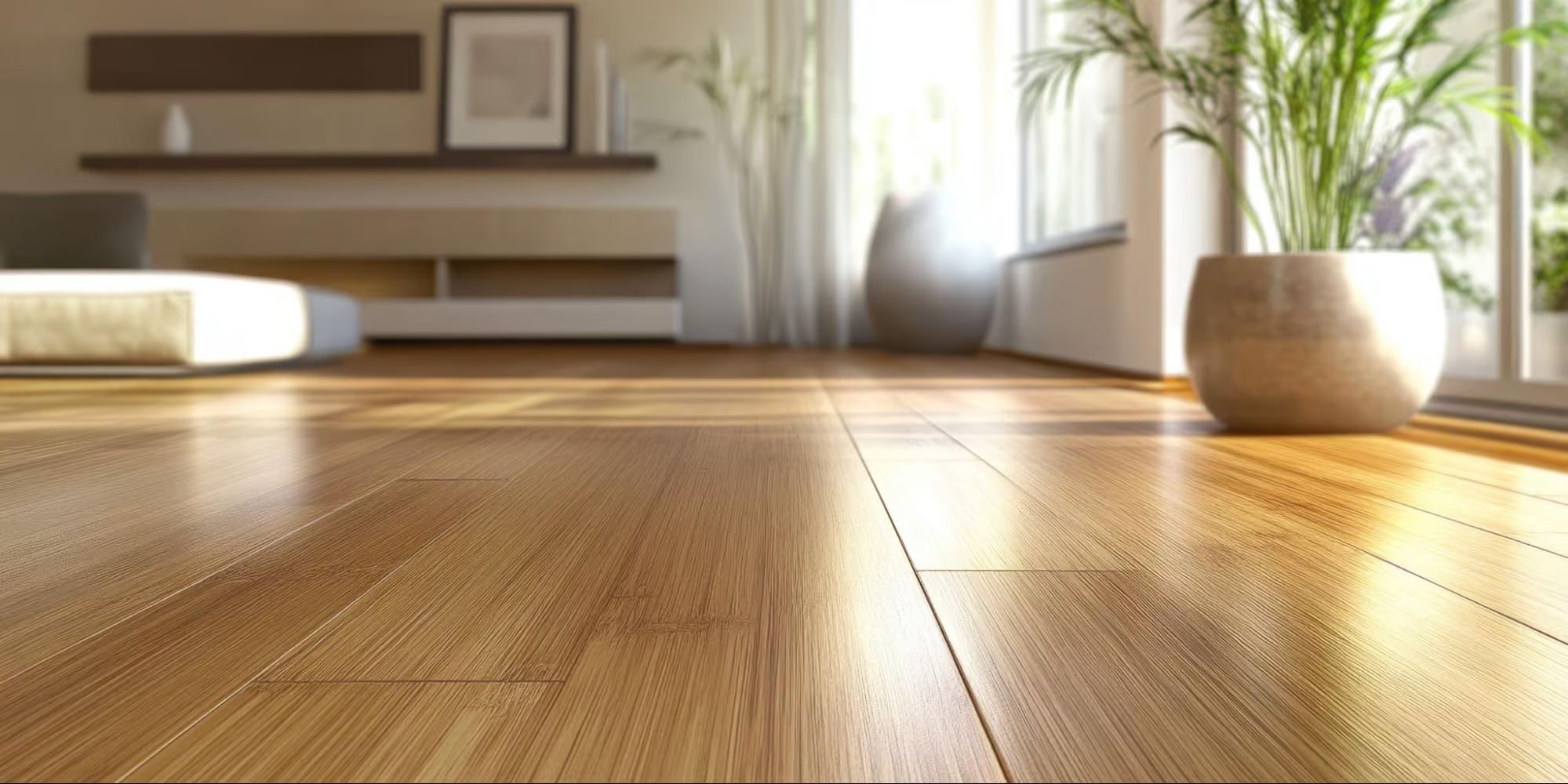
When most people think about flooring, their attention naturally goes to what they can see. Hardwood, tile, carpet, or luxury vinyl all make a statement, set the tone of a space, and contribute to the overall feel of a home or business. But what lies beneath those finished surfaces is just as important, and often far more critical to long-term performance.
The subfloor is the foundation of every flooring system. If it is not evaluated correctly, prepared, and installed, even the highest-quality flooring materials can fail to perform as expected. At Flooring Services LLC, we have seen firsthand how subfloor issues can lead to costly repairs, visible damage, and unnecessary frustration. Understanding why your subfloor matters can help protect your investment and ensure your floors look and perform the way they should for years to come.
What Is a Subfloor?
The subfloor is the structural layer that sits directly beneath your finished flooring. It provides a stable, level surface for installation and plays a significant role in how your floors respond to daily use, moisture, temperature changes, and weight.
Common subfloor materials include plywood, oriented strand board (OSB), and concrete slabs. Each type requires specific preparation methods, depending on the type of flooring being installed. The condition of the subfloor determines how well planks lock together, how tile adheres, and how evenly the weight is distributed across the surface.
A strong subfloor is not just about support. It also affects sound control, moisture protection, and overall durability.
Why Subfloor Preparation Is Often Overlooked
Subfloor work is not the most visible part of a flooring project, which is why it is sometimes rushed or ignored entirely. In budget-driven installations, installers may skip leveling, moisture testing, or repairs to expedite the process.
Unfortunately, these shortcuts almost always show up later.
Gaps between planks, cracked tile, hollow sounds underfoot, and uneven surfaces are often attributed to subfloor problems. By the time these issues appear, the finished flooring often has to be removed to address the underlying cause.
At Flooring Services, we believe the best installs start long before the first plank or tile is laid.
How an Improper Subfloor Affects Your Flooring
A poorly prepared subfloor can impact every flooring type differently, but the results are always noticeable.
Hardwood and Engineered Wood Flooring
Wood floors rely on a flat, dry, and stable subfloor. Even minor variations can cause planks to shift, creak, or separate over time. Moisture issues beneath wood flooring can lead to cupping, crowning, or warping of the flooring.
Without proper moisture testing and acclimation, hardwood floors are especially vulnerable to long-term damage.
Tile Flooring
Tile requires a highly flat and solid surface. Any movement in the subfloor can lead to cracked tiles or grout lines. Uneven subfloors also make it challenging to achieve consistent spacing and alignment, which affects both appearance and performance.
This is why selecting the proper underlayment and preparing the surface are critical steps in tile installations.
Luxury Vinyl Plank and Laminate Flooring
Floating floors, such as luxury vinyl plank and laminate, are often marketed as forgiving, but that does not mean they can be installed over a poor subfloor. These products still require flatness within the manufacturer's tolerances.
If the subfloor is uneven or soft in certain areas, seams can fail, planks can unlock, and wear patterns can appear prematurely.
Carpet
Carpet can sometimes hide minor imperfections, but subfloor issues still matter. Uneven surfaces can cause visible dips, premature wear, and instability under heavy furniture. Proper padding and surface prep help extend the life of carpet and improve comfort.
Moisture and the Subfloor
One of the biggest threats to any flooring system is moisture coming from below. Concrete slabs, crawl spaces, and basements are all familiar sources of excess moisture.
Without proper vapor barriers, sealers, or moisture mitigation systems, that moisture has nowhere to go. Over time, it can cause adhesives to fail, planks to swell, and mold to develop.
At Flooring Services, understanding the environment allows us to select the right materials and installation methods for each space.
Leveling and Flatness Matter More Than You Think
Many people assume their floors are level because they look fine at a glance. In reality, even minor height variations can cause significant problems once the flooring is installed.
Manufacturers specify strict tolerances for flatness, often measured within a few millimeters over several feet of length. If these tolerances are exceeded, warranties can be voided.
Subfloor leveling may involve grinding high spots, filling low areas, or installing self-leveling compounds to achieve a smooth surface. While this adds time to the project, it prevents long-term issues and ensures a clean, professional result.
Subfloor Issues in Older Homes and Renovations
Older homes often present unique subfloor challenges. Years of settling, previous flooring layers, water damage, or outdated construction methods can all impact the integrity of the subfloor.
During renovations, removing old flooring can reveal hidden problems. Adhesive residue, damaged boards, or uneven patches must be addressed before new flooring goes down.
Ignoring these issues does not save money in the long run. It simply shifts the cost to future repairs.
Commercial and Multi-Family Considerations
In commercial and multi-family settings, subfloor preparation is even more critical. High foot traffic, rolling loads, and stringent building standards necessitate flooring systems that can withstand constant use.
Sound transmission, fire ratings, and durability all depend on the proper installation of subfloor systems. A well-prepared subfloor helps maintain consistency across large spaces and multiple units.
This is one reason why experienced installers are essential for commercial projects.
The Flooring Services Approach
At Flooring Services LLC, subfloor evaluation and preparation are never an afterthought. Our team takes the time to inspect, test, and address subfloor conditions before installation begins.
We work closely with builders, designers, property managers, and homeowners to ensure each project starts with a solid foundation. Our goal is not just to install flooring that looks good on day one, but to deliver results that last.
From moisture mitigation to leveling and repairs, the details below the surface matter as much as the finishes you see.
Why Cutting Corners Costs More
When subfloor preparation is skipped or rushed, problems tend to surface months or even years later. At that point, repairs often require removing finished flooring, disrupting daily life, and incurring additional labor and material costs.
Doing the work correctly from the start protects your investment and avoids unnecessary headaches.
Final Thoughts
Your flooring is only as strong as what supports it. Although the subfloor may not be visible once installation is complete, it plays a crucial role in determining performance, comfort, and longevity. Whether you are building new, renovating, or managing a commercial property, paying attention to subfloor conditions is one of the most thoughtful decisions you can make. Proper preparation ensures your floors stay beautiful, stable, and functional for years to come. At Flooring Services LLC, we take pride in doing things the right way, starting from the ground up. If you are planning a flooring project and want expert guidance from start to finish, contact us today to learn how our team can assist you.


